
Acoustic
Design
Acoustic design addresses the unseen, after all: sound can be a difficult subject, obvious yet invisible to the eye. Real success, measured by design excellence and operational efficiency, is achieved through a balance of talent, understanding, and technical skill. Art and science go hand in hand.
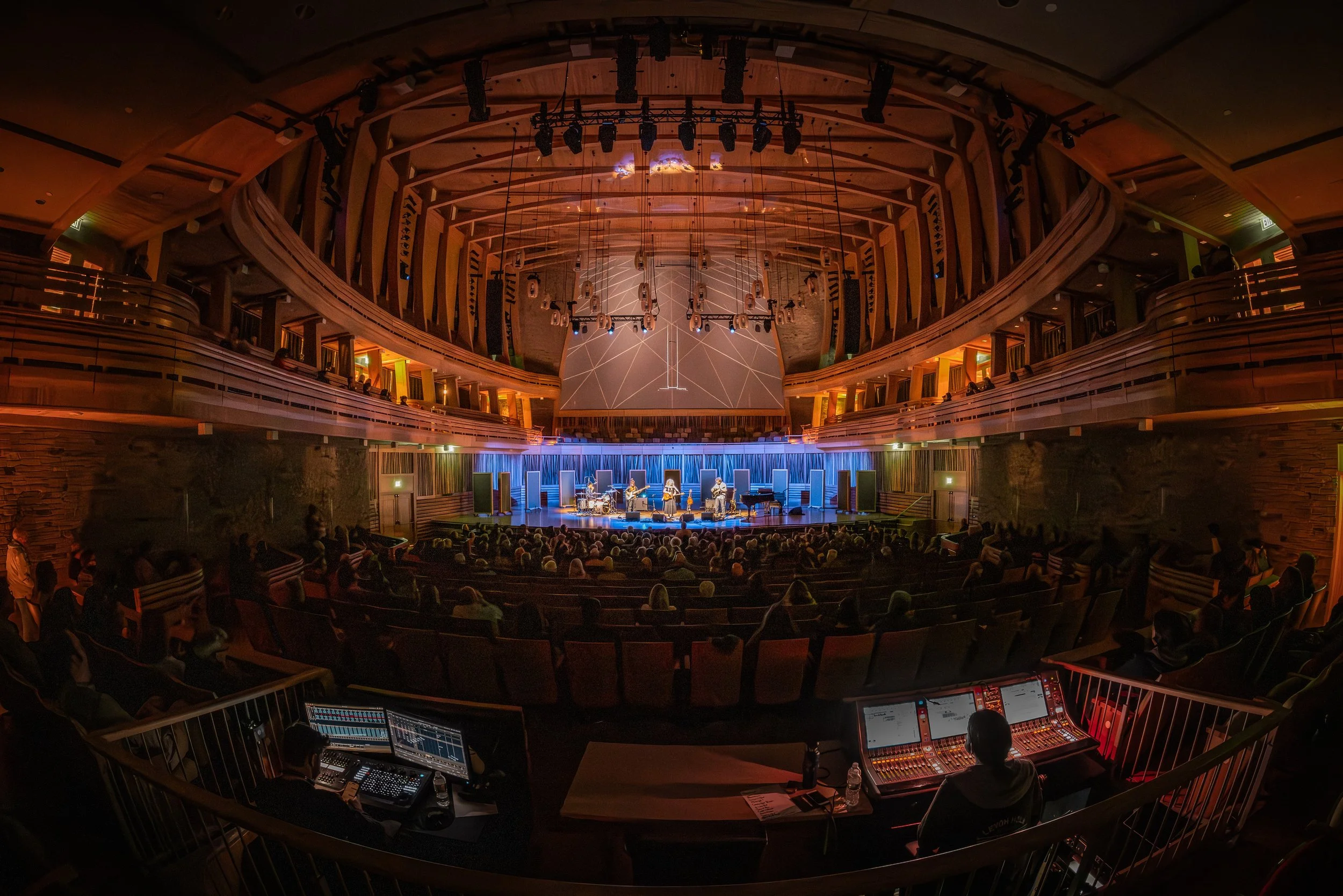
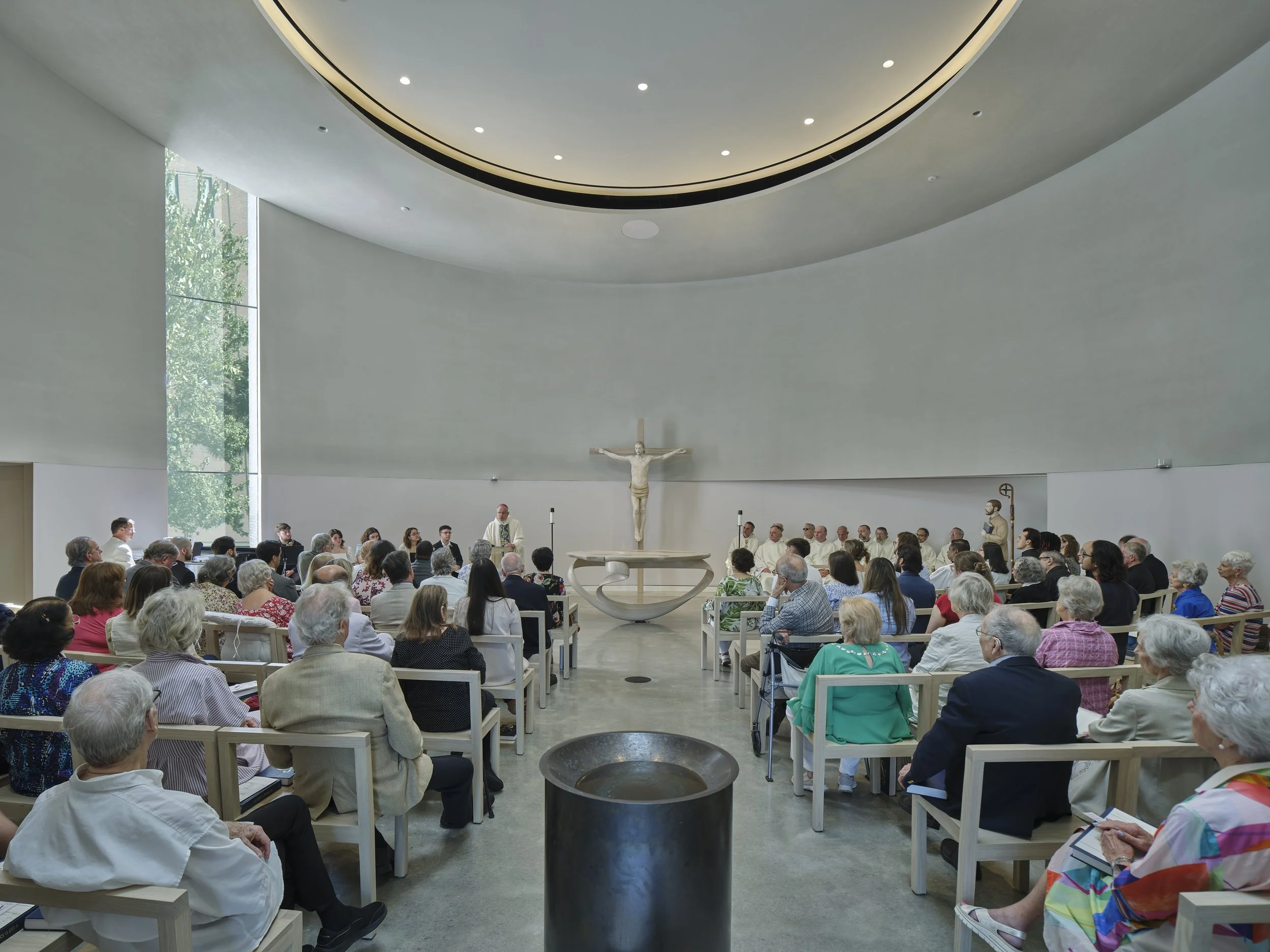

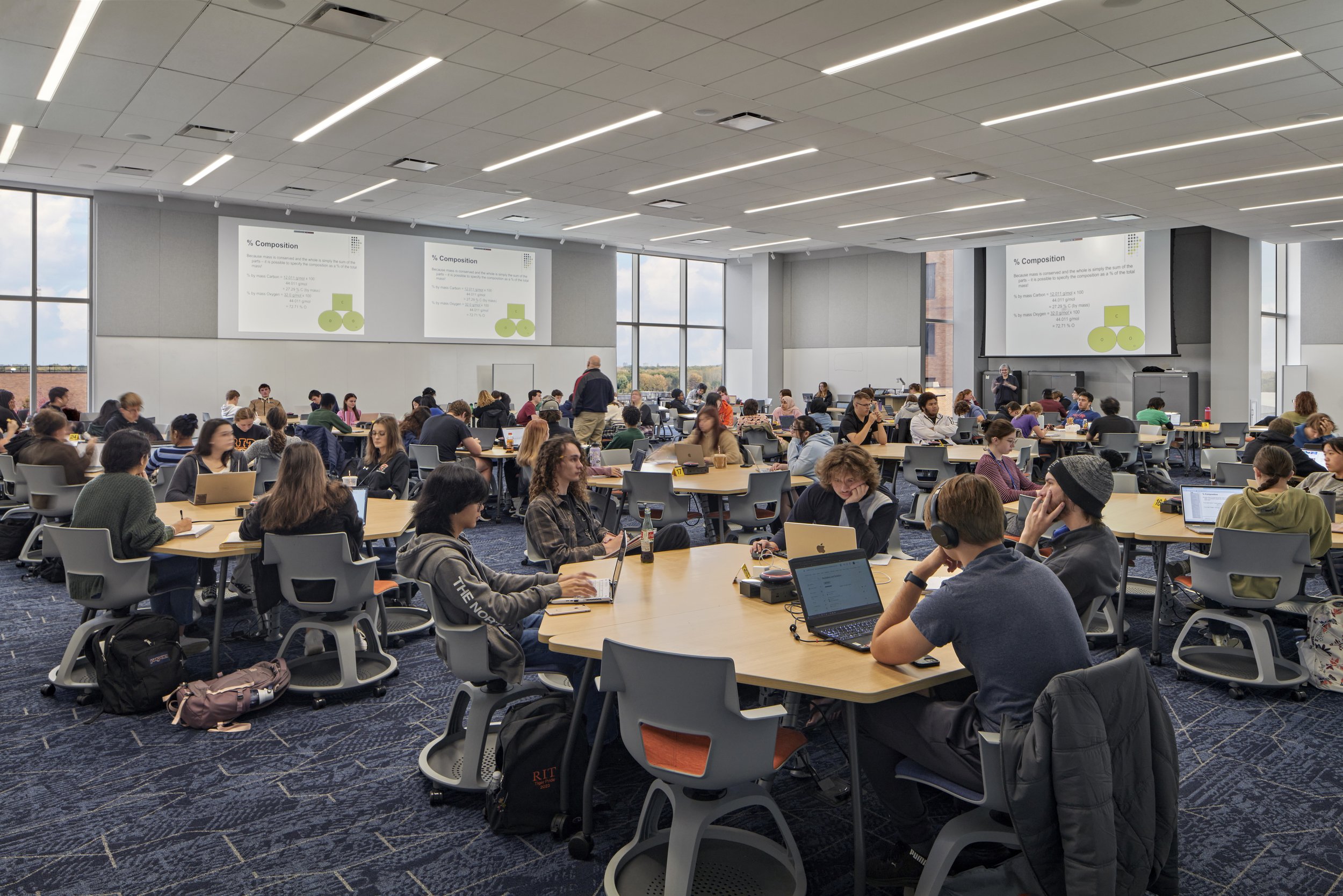

Why it Matters
We are still, at our core, creatures who gather. A song, a story, a prayer, a lecture, a conversation over dinner: these are the reasons buildings exist. The built environment is the ecology we create to hold them. When that ecology is well designed, sound behaves the way our hearing expects it to, through a million years of evolution. People communicate more easily, feel more present, and leave having experienced something they could not have experienced alone. The room itself becomes a participant.
That is what we are building toward: an invisible system, tuned to the human experience, that makes the act of gathering feel complete.
Long before words, we called out to the unseen and relied on their ability to find us. We circled fires and told stories. We sang to the forest and heard our voices linger in it. Hearing has always been central to how we place ourselves in the world, and that has not changed.
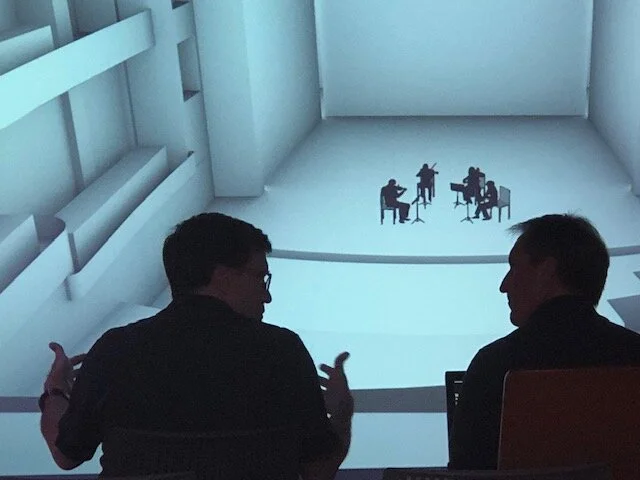
Explore Threshold's Online Auralization Studio where you can hear your voice as a performer inside some of the world's best rooms.
Our Approach
Great acoustics emerge from collaboration. Our team brings individual backgrounds in music, mathematics, physics, engineering, and architecture to every project. We work alongside architects from the earliest conversations, asking the right questions while options are still open and advocating for the people who will ultimately live and work in these spaces.
Because acoustics are intrinsic to architecture rather than additions to a completed design, we join the conversation at concept and stay through construction.
Services
Room Acoustics. Sound interacts with the surfaces and objects in a room. We develop design criteria, overall room geometry, and finish materials to support clear communication and optimize the character of the room's acoustic response.
Sound Isolation. A well-isolated space gives people the freedom to focus. We design enclosures that protect spaces from unwanted noise through sound transmission studies and targeted mitigation strategies.
Noise Control. We address sound and vibration generated by mechanical, electrical, plumbing, and specialty building systems to create appropriately quiet spaces, using acoustic modeling and coordinated mitigation.
Environmental Acoustics. Sound moves through outdoor environments and shapes how communities experience the world around them. We model noise propagation and develop mitigation strategies for sites where exterior sound is a consideration.
Accessible Design. Assistive listening, closed captioning, audio description, and equitable AV access planned from the start. We advocate for meaningful access for all current and potential future users of a building.
Acoustic Modeling and Rendering. We build acoustic models to predict and visualize sound behavior in proposed spaces, allowing us to test room shapes, materials, and isolation strategies iteratively before anything is built. Learn more.
Site Evaluations. Acoustic and AV testing to document existing conditions: unamplified and amplified sound, background noise, and acoustic isolation. For new construction, we conduct benchmarking studies of comparable facilities.
How We Think About It
Every project type presents its own possibilities. A concert hall and an immersive media installation call for different thinking. So does a classroom designed to help every student learn, or a civic space where being heard is a matter of dignity.
We approach each project as a process of discovery and evaluation. We build relationships with clients and collaborators based on candor and good will, because the best acoustic outcomes come from honest exchange and shared purpose across the whole design team.
The Result
Spaces that perform, for performers, teachers, students, audiences, and communities. The warmth of a room that holds sound well. Quiet that lets people concentrate. Clarity that lets every voice be heard.